
For many families, summer brings a welcome break from the demands of the school year. Longer days, vacations and flexible schedules can create opportunities for fun and connection; however, when school ends, the brain doesn’t simply switch off.
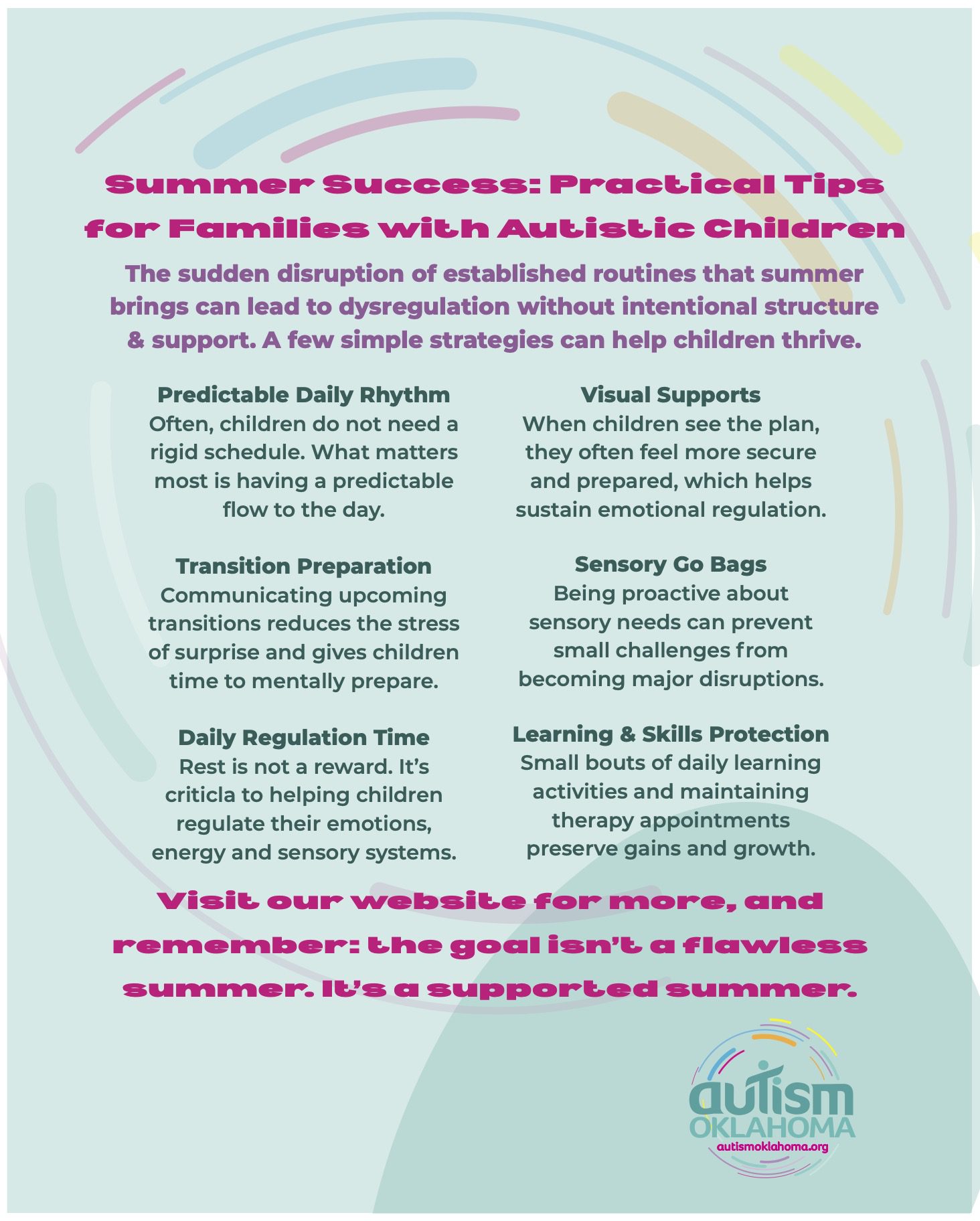
All children experience a reduction in routine, external structure and predictability during the summer months. For autistic children, though, the impact can be even greater. The sudden disruption of established routines can lead to increased stress, anxiety and dysregulation if families or caregivers are not intentional about creating structure and support.
The good news is that summer doesn’t have to feel chaotic, nor does it have to feel as rigid as the school year. A few simple strategies can help children thrive while still allowing plenty of room for fun and relaxation.
Maintain a Predictable Daily Rhythm
Often, children do not need a rigid, hour-by-hour schedule to be successful. What matters most is having a predictable flow to the day.
A simple rhythm might look like this:
- Breakfast
- Morning activity
- Lunch
- Quiet time
- Afternoon activity
- Dinner
- Family walk or playtime
- Wind-down routine
- Bedtime
Consistency matters more than rigidity. When children know what generally comes next, they can navigate their day with greater confidence and less anxiety.
Use Visual Supports
Visual supports can provide clarity and reduce uncertainty about what the day will hold. Consider using:
- Picture schedules
- Daily checklists
- First → Then boards
- Visual calendars
These tools help children understand expectations and transitions while promoting appropriate levels of independence. When children can see the plan, they often feel more secure and prepared which helps sustain emotional regulation.
Prepare for Transitions
Many challenging behaviors occur not because children are unwilling to transition, but because transitions can feel abrupt and unpredictable. Whenever possible, communicate upcoming changes ahead of time. Timers and verbal reminders can be especially helpful.
A simple approach is to provide notices at:
- 15 minutes before the transition
- 10 minutes before the transition
- 5 minutes before the transition
These reminders reduce surprise-based stress and give children time to mentally prepare for what comes next.
Plan for Sensory Needs
Summer is rife with sensory experiences—often enjoyable and some overwhelming. Heat, bright sunlight, crowds, loud events, unfamiliar environments, sunscreen/sunburns and changes in clothing can all contribute to a sensory explosion.
A sensory tool bag can be a lifesaver when you’re away from home. Consider including:
- Noise-canceling headphones
- Fidget toys or spinners
- Chewable sensory tools
- Stress balls or squishies
- Favorite snacks
- Extra clothing
- Sunglasses or hats
- Sunscreen (There are many types of sunscreen. If possible, try sample sizes of different varieties to find one your child will tolerate).
Being proactive about sensory needs can prevent small challenges from becoming major disruptions.
Build Regulation Time into Every Day
In a season that often feels packed with activities, it can be tempting to stay constantly on the go; however, regulation requires intentional downtime.
Try to incorporate:
- Water play
- Sand play
- Movement activities
- Quiet breaks
- Low-demand time
- Opportunities for rest
Remember, rest is not a reward. It is an essential part of helping children regulate their emotions, energy and sensory systems.
Create Weekly Anchors
Too much unstructured free time can feel overwhelming rather than relaxing. Weekly “anchors” provide predictable points that help children feel grounded throughout the summer.
Examples include:
- Swimming days
- Library visits
- Therapy appointments
- Family walks
- Community activities
- Visits with grandparents or other loved ones
These recurring events create a sense of stability while still allowing flexibility in the rest of the week.
Protect Learning and Therapy Gains
Summer is a wonderful time to slow down, but it is also important to maintain the progress children have worked so hard to achieve during the school year. Learning does not need to look like school.
Consider small bouts of the following:
- Reading together each day
- Playing math-based games
- Exploring STEM activities
- Practicing life skills through daily routines
- Encouraging curiosity through play
If your child receives therapy services, maintaining consistency with appointments whenever possible can help preserve important gains and support continued growth.
Final thoughts
A successful summer doesn’t mean a flawless summer. The goal isn’t to create a perfectly structured summer. The goal is to provide enough predictability, support and flexibility for your child to both regulated and engaged.
By maintaining routines, supporting sensory needs, planning for transitions and protecting opportunities for growth, families can create a summer that is both enjoyable and successful. Small, consistent strategies often make the biggest difference, and they can help everyone enjoy the season a little more.
Autism Oklahoma’s summer calendar is quickly filling with fun and meaningful activities like LEGO camp, art camp, family swim nights, game nights and more. Visit our events page, and be sure to register to join us!