
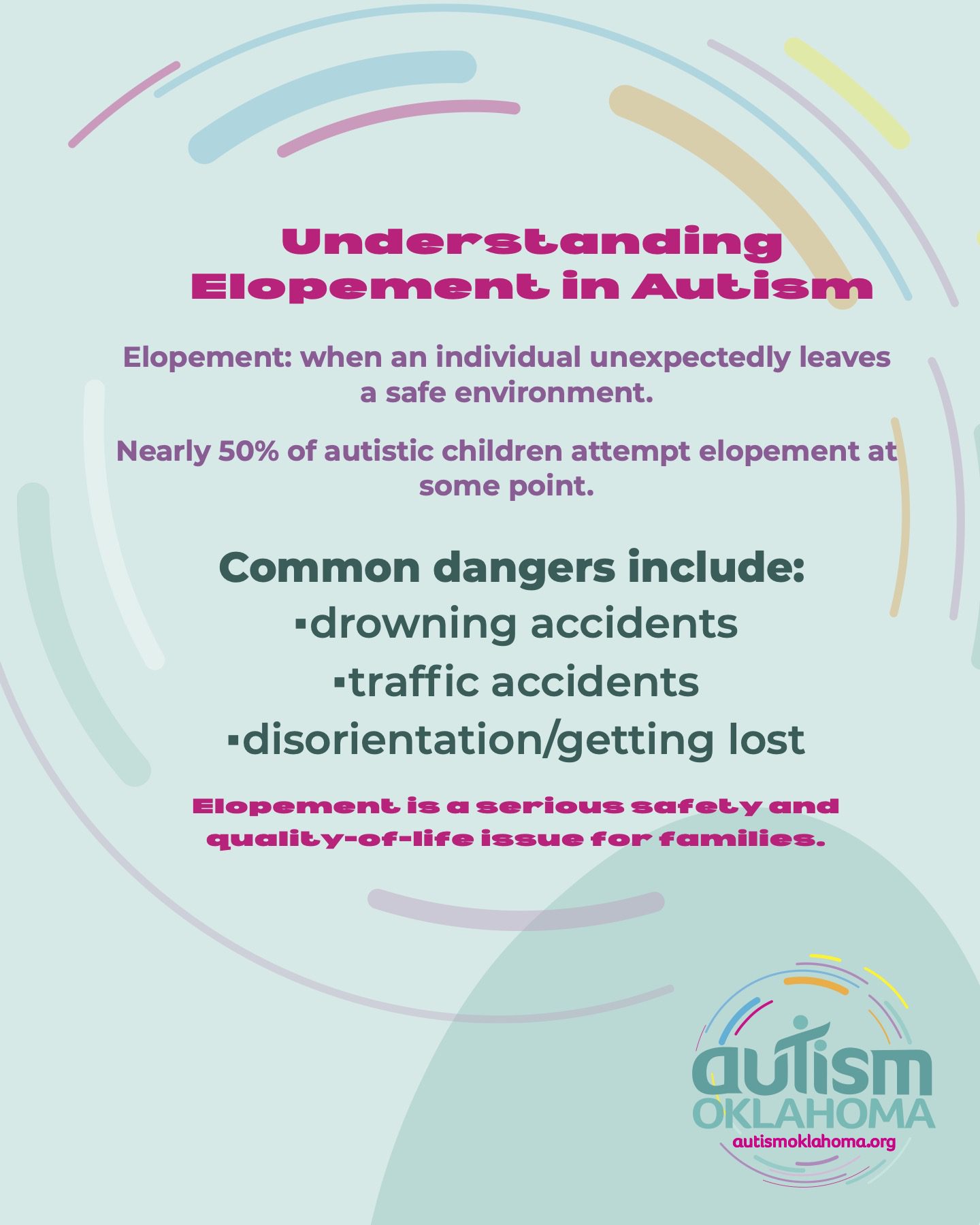
Elopement – also called wandering – is a serious safety concern for many individuals of all ages with autism. It refers to leaving a safe environment or the care of a responsible adult without permission or awareness. This might look like a child running out of a classroom, leaving home unnoticed or bolting in a public place. While brief wandering is common in toddlers, elopement in individuals with autism can persist longer and carry significantly greater risks.
Why Elopement Matters
According to the American Academy of Pediatrics, nearly half of children with autism attempt to wander from a safe setting at some point. In many cases, this behavior leads to dangerous situations. Children may be drawn toward water, traffic or unfamiliar environments without understanding or regarding the risks. Tragically, drowning remains the leading cause of death in elopement-related incidents, followed by traffic injuries.
Children with autism may also face additional vulnerabilities. Many have difficulty communicating their name, address or phone number, making it harder for others to help them if they become lost. Some may not respond to their name or recognize danger, increasing the urgency when a child goes missing.
Understanding the “Why” Behind Wandering
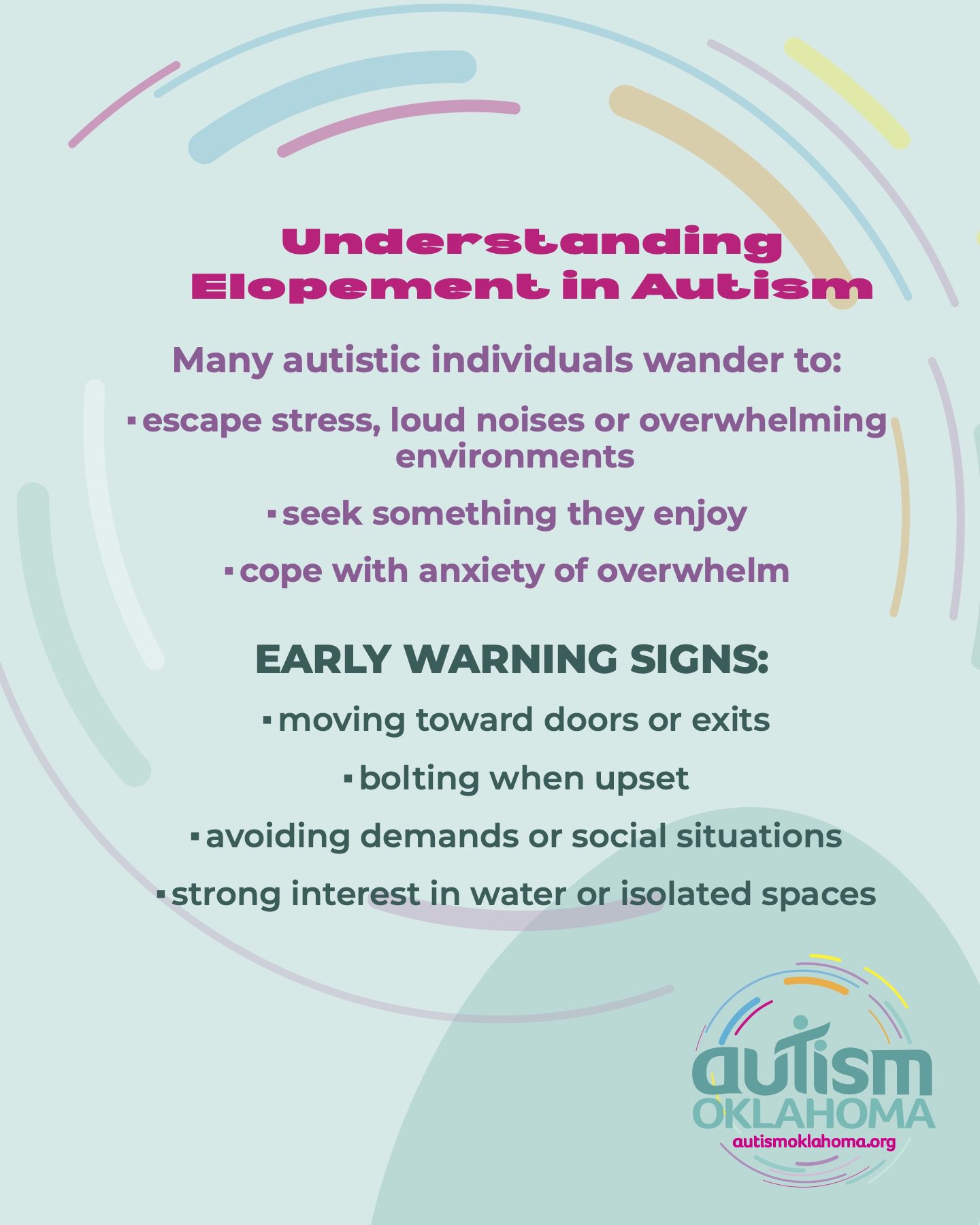
Elopement is often a form of communication. Many individuals with autism wander because they are trying to meet a need or escape a situation. Common reasons include:
- Seeking enjoyment or exploration
- Going toward something they like, such as water, parks or a favorite location
- Escaping stress or discomfort, such as loud noises, demands or overwhelming environments
- Curiosity, such as wanting to see something interesting nearby
Stress and anxiety can increase the likelihood of wandering, especially for individuals who struggle with emotional regulation or coping skills.
Early Warning Signs
The National Autism Association emphasizes that elopement behaviors often begin early. Some signs to watch for include:
- Moving away from caregivers unnoticed
- Avoiding demands or social situations
- Bolting when upset or overwhelmed
- Showing a strong interest in water or quiet, isolated spaces
- Frequently looking toward exits or doors
Recognizing these patterns early can help caregivers intervene before a dangerous situation occurs.
Practical Steps to Keep Children Safe
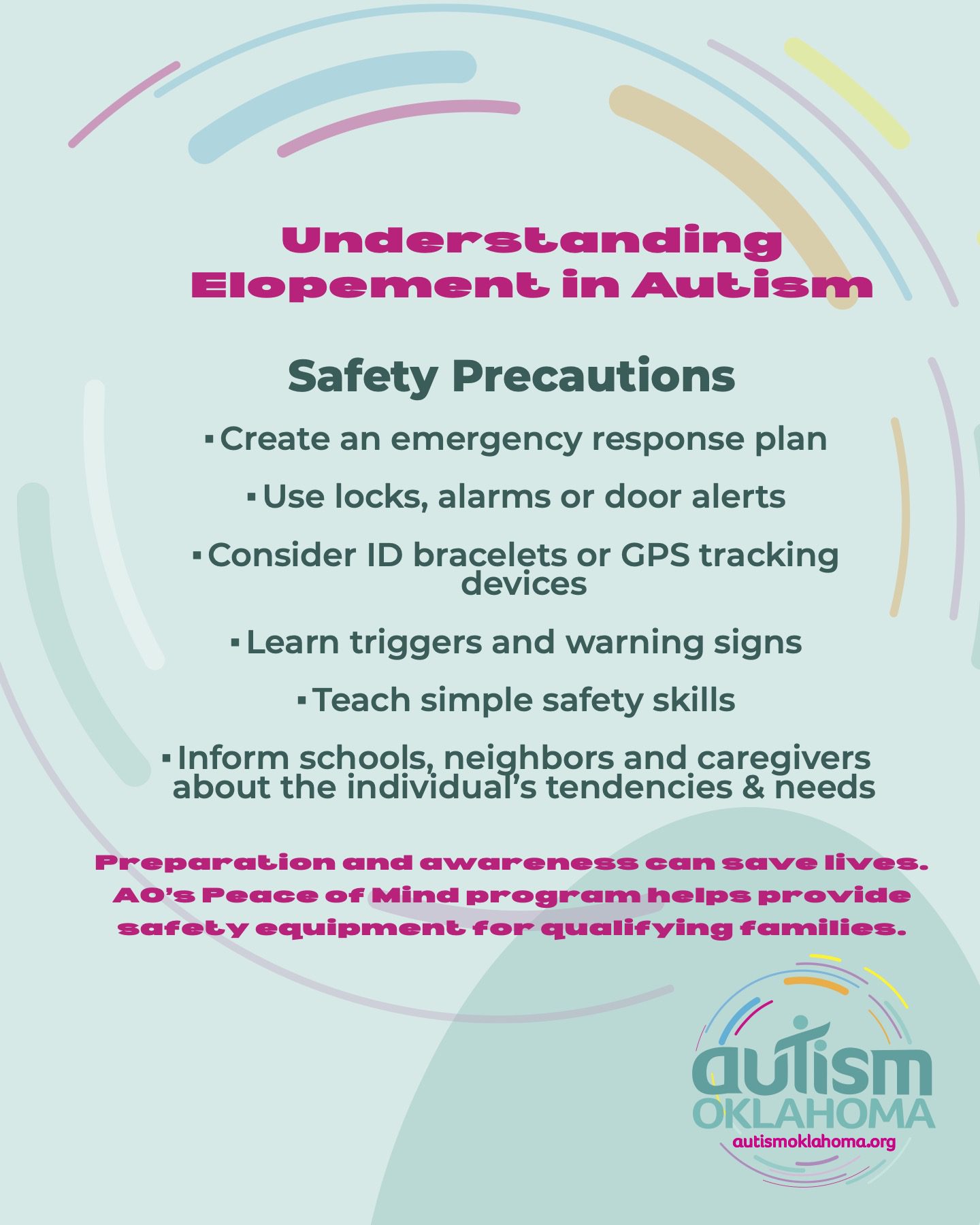
The ability to prevent elopement and/or to return an eloped individual safely home is greatly increased by being proactive:
1) Plan Ahead
- Create an emergency response plan in case a child goes missing
- Keep updated information, including recent photos and descriptions
- Inform neighbors, schools and community members about the child’s needs
- Consider alerting local first responders in advance
2) Secure the Environment
- Install locks, alarms or fences around the home
- Use door alerts or monitoring systems
- Ensure safe play areas are clearly defined and secure
- Place Apple Airtags in the child’s shoes
3) Use Identification
- Have the child wear an ID bracelet or carry an information card
- Include contact details and any important communication needs
4) Stay Observant
- Learn the child’s triggers and patterns
- Watch for signs they may be preparing to wander (e.g., heading toward doors, changes in behavior)
- Maintain close supervision, especially in unfamiliar or high-risk environments
5) Teach Safety Skills
- Practice responding to simple commands like “stop”
- Teach the child to share their name or use ID when needed
- Introduce basic safety skills such as street crossing and swimming
Final Thoughts
Elopement is more than a safety concern. It can deeply affect the emotional well-being of families and caregivers. Many live with a constant sense of vigilance, knowing that a child may wander quickly and unexpectedly, even in familiar or supervised settings; and this ongoing awareness can lead to heightened stress and anxiety, shaping daily routines and limiting a sense of ease in everyday life.
Because of this, elopement should be understood as both a safety and quality-of-life issue. It is a complex behavior with meaningful underlying causes, and recognizing those causes is an important step toward prevention. When caregivers, educators and communities work together to build awareness, proactively plan and put supports in place, they can significantly reduce risks and create safer, more supportive environments.
Preparation is not about expecting the worst. It is about being ready to respond effectively and confidently, helping ensure the safest possible outcome for individuals with autism when it matters most.
Autism Oklahoma’s Peace of Mind program will grant life-saving safety equipment to families with one or more children on the autism spectrum whose safety is at risk. Through an application process, qualifying families may receive a GPS tracking system. If you would like your family to be considered for a grant for safety equipment, please complete and submit the application on our website. Application windows close April 30 and October 31 each year.